
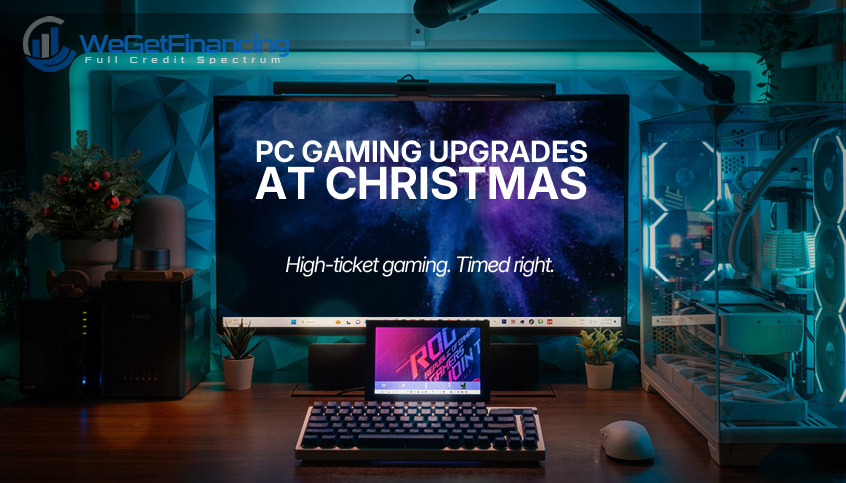
For many consumers, BNPL for PC gaming is no longer about convenience but about timing. In other words, buying a gaming PC or a high-performance laptop is not an impulse purchase. It is a decision postponed over months, sometimes an entire year, shaped by hardware cycles, pricing uncertainty, and competing priorities. As a result, the holiday season — and Christmas in particular — has become the moment when these deferred decisions finally turn into purchases.
In this context, Buy Now Pay Later (BNPL) should not be viewed as a promotional add-on. It increasingly plays a structural role in when and how consumers commit to high-ticket technology.
Market & Financing Snapshot
— BNPL for PC Gaming (Seasonal Context)
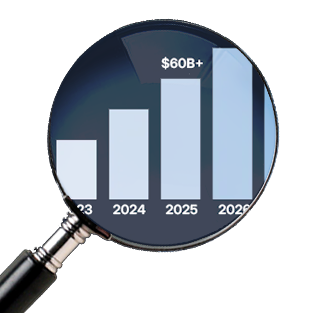
• Global PC gaming hardware market: $60B+ annually
• Growth driver: mid-range and premium systems
• Typical gaming PC ticket: $1,500–$3,000+
• Peak purchasing period: Q4 / Christmas
• Dominant financing format: BNPL and installment plans (6–60 months)
• Key challenge: converting high-intent buyers with diverse credit profiles
Sources: Statista, Fortune Business Insights, Grand View Research, retailer case studies.
I. PC Gaming, Christmas Momentum, and the Reality of High-Ticket Tech Purchases
A fast-growing market driven by performance expectations
The PC gaming hardware market is experiencing sustained growth, supported by long-term investment in performance-driven systems rather than entry-level configurations. Industry analysis shows sustained growth in the gaming PC market, with demand increasingly concentrated in mid-range and premium segments.
In 2025, global revenues from gaming PCs and laptops exceeded $60 billion. This growth reflects a broadening of use cases beyond gaming alone, including content creation, streaming, and professional workloads. Desktop systems continue to appeal for their modularity and upgrade potential, while gaming laptops gain traction as portability becomes a decisive factor.
Growth is no longer driven by entry-level demand. Instead, accelerating adoption of mid-range and high-end configurations has pushed average ticket sizes upward. For consumers, this shift results in more deliberate purchasing decisions, where performance expectations and long-term value outweigh impulse buying.
Christmas as the natural release point for deferred upgrades

High-ticket technology purchases rarely occur the moment the desire appears. Gamers and power users typically monitor component launches, benchmark improvements, and pricing trends over time. The decision is formed early; the execution comes later.
Christmas plays a unique role in this cycle. Year-end bonuses, promotional periods, and the psychological appeal of starting a new year with upgraded equipment converge to create a moment that feels financially and socially legitimate. Buying a gaming PC in December is therefore framed as a planned upgrade or a meaningful gift rather than an impulsive expense.
Rising prices, hardware uncertainty, and buyer hesitation
Hardware volatility and cost pressure
Recent years have shown that hardware pricing does not always trend downward. Tariffs, supply constraints, and manufacturing costs have introduced uncertainty into what was once a predictable upgrade cycle.
As a result, many consumers no longer expect significant price drops after the holidays.
Components that drive pricing anxiety
Graphics cards, processors, and long-term upgradeability remain the primary sources of pricing anxiety. Buyers are not simply paying for today’s performance; they are attempting to avoid regret six or twelve months later. This concern often delays purchases until a moment that feels financially and psychologically safer.
Christmas as a socially accepted moment for big purchases
Faced with uncertainty, consumers default to timing rather than speculation. Christmas becomes the safest moment to buy — not necessarily the cheapest, but the most justifiable. Waiting has its own cost, and the holiday season often marks the point where postponement no longer feels rational.
PC gaming vs. consoles: versatility and long-term value
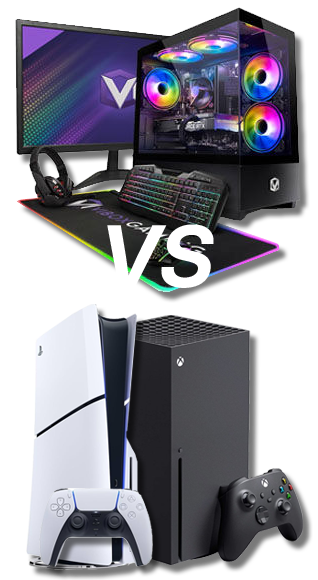
Unlike consoles or single-purpose devices, gaming PCs are increasingly perceived as long-term platforms. Beyond gaming, they support streaming, content creation, software development, and AI-related experimentation.
This versatility strengthens the perceived value of the investment and encourages buyers to aim higher in terms of performance. At the same time, higher ambition inevitably leads to higher budgets, amplifying friction at the moment of payment — particularly during an already expensive holiday season.
II. The Role of Financing in Converting Holiday Demand into Sales
In the computer retail industry, BNPL for PC gaming is no longer a secondary option. As system prices increasingly exceed four-figure thresholds, installment-based payments and BNPL have become embedded into the purchasing flow, especially online. During peak holiday periods, the structure and inclusiveness of financing directly influence whether high-intent purchases are completed or abandoned.
The checkout moment: where intent meets financial friction

By the time a buyer reaches checkout, the product decision is usually settled. What remains is financial validation. Seeing a four-figure total in a single transaction often reactivates doubt, even after months of consideration.
This friction peaks during the holidays, when budgets are already strained by gifts, travel, and family obligations. At this point, the structure of the payment becomes as influential as the product itself.
From upfront shock to manageable commitment
BNPL does not reduce the price of a gaming PC. What it changes is the perception of commitment. Breaking a large purchase into predictable monthly payments transforms a one-time financial shock into a controlled decision, particularly valuable during a season already dense with expenses.
As ticket sizes increase, payment flexibility shifts from convenience to necessity. For many buyers, especially during the holidays, the ability to control cash flow determines whether a long-planned purchase is completed or postponed again.
Alignment with younger and tech-savvy buyers

Younger consumers, students, and early-career professionals are often highly motivated to invest in performance hardware but constrained by liquidity. BNPL aligns with their budgeting habits without pushing them toward revolving credit or long-term debt structures.
This generational fit is explored in more detail in our analysis of flexible PC gaming financing options, where access, approval dynamics, and buyer expectations are examined across different gamer profiles.

BNPL for PC gaming: financing options aligned with gaming and high-tech purchases
Different gaming purchases naturally align with different financing horizons. Short-term installment plans work well for peripherals, accessories, and entry-level systems. Mid-term plans better match gaming laptops and balanced desktop builds, while premium custom rigs often justify longer repayment periods aligned with multi-year usage cycles.
As financing expectations evolve, some platforms are expanding their offer to better match real purchasing behavior. As Stéphane Touboul, CEO of WeGetFinancing, explains:

“Thanks to our latest lender integrations, we can now offer new options such as paying over six months with 0% interest, in addition to longer-term loans of up to 36 months. Together, these options allow PC gamers and performance-focused buyers to build stronger setups, access them immediately, and pay over time.”
This type of flexibility reflects a broader shift in PC gaming commerce: financing is no longer about fitting buyers into a single model, but about adapting payment structures to the diversity of systems, budgets, and upgrade strategies.
At the same time, retailers need to cover a wide range of financing scenarios without turning payment integration into a technical burden. The effectiveness of financing depends less on the number of options offered than on their alignment with real purchase behavior and a frictionless checkout experience.
These dynamics reflect a broader shift in how financing integrates into the PC gaming ecosystem. We explored this evolution in depth in our earlier article on how BNPL reshaped purchasing behavior in the PC gaming industry, including the impact of inflation, lender diversity, and approval flexibility.
Why inclusive financing matters more during the holiday season
During the holiday season, high purchase intent collides with highly diverse credit profiles.
A collision of credit profiles
Holiday traffic brings together students, young professionals, parents, and experienced gamers. Their credit profiles vary widely, and rigid financing models struggle to accommodate that diversity.
The limits of single-lender approaches
Relying on a single financing provider during peak season increases rejection risk. Declines at checkout are particularly costly in December, when purchase intent is already high. Broader financing coverage reduces friction without complicating the customer experience.
Invisible Rejected Customers
During peak holiday traffic, BNPL rejections often go unseen even though they happen at the moment of highest purchase intent.
In many cases, the customer is eligible but rejected due to rigid financing paths; this silent friction is explored in the hidden cost of financing rejections.
Best practices for tech and gaming retailers during Christmas
Emphasizing monthly pricing at key decision points
Displaying monthly payments alongside total prices helps buyers contextualize affordability, especially during configuration and checkout stages.
Offering choice without complexity
Multiple financing paths should feel invisible to the user. The goal is flexibility, not decision overload. Consumers are not financing experts; exposing them to multiple brands or poorly matched options can turn a high-intent purchase into a failed checkout. Smart financing orchestration aligns the most relevant lender options within a simple, guided funnel.
Final Perspective: Timing, Psychology, and Payment Structure
Christmas has become more than a promotional window for high-tech purchases. It is the moment when deferred demand, rising prices, and psychological readiness converge. In this environment, BNPL for PC gaming is no longer peripheral — it plays a structural role in determining when high-intent buyers are finally able to commit.
For gaming and high-tech retailers, holiday performance depends less on discounts and more on payment structures that align with how modern buyers actually make decisions.
The WeGetFinancing Editorial Team
Expert insights on BNPL, consumer financing, and retention strategies.