
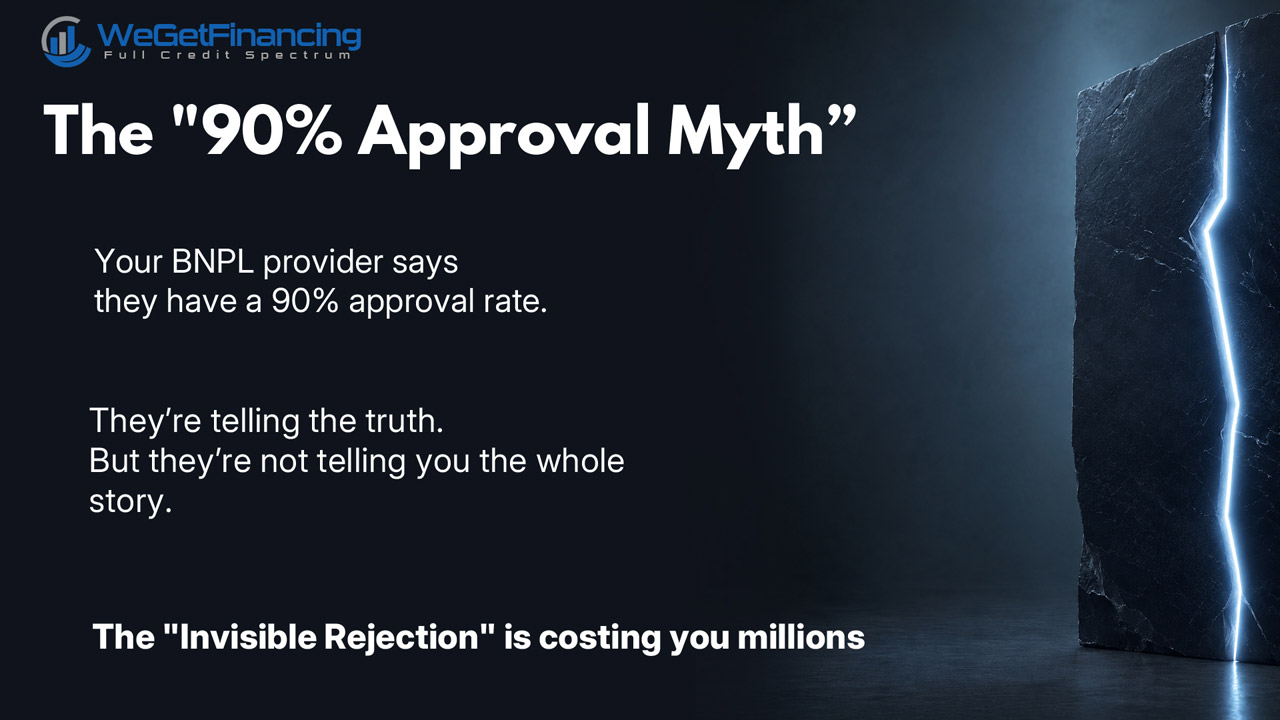
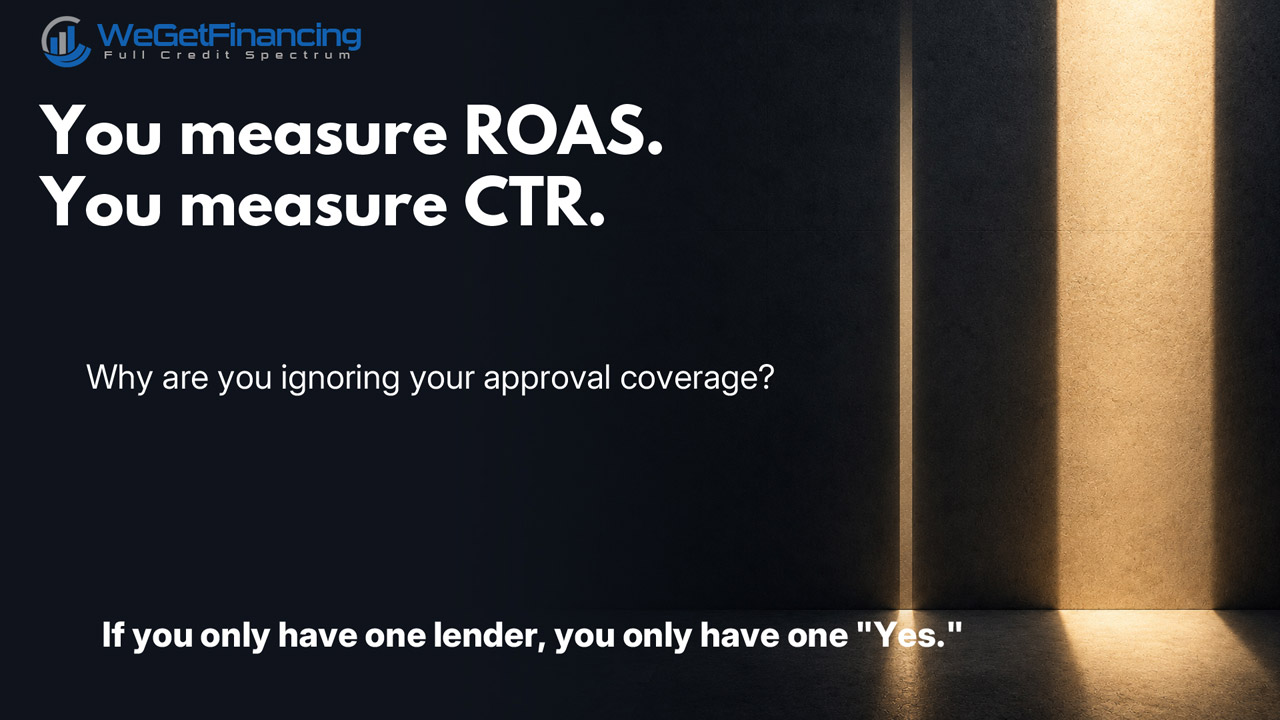
In the BNPL industry, single-lender providers often claim a 90% approval rate. On paper, it looks great, but what is that percentage actually measuring?
For high-ticket merchants, that number rarely tells the full story. And that missing part matters, because it can translate into major revenue leakage or significant optimization when properly addressed.
The Denominator Problem: Why 90% Doesn’t Equal Success
Swipe through our quick diagnostic summary below, or read on for the forensic breakdown.
Download this diagnostic carousel as PDF
In mathematics, a percentage is only as honest as its denominator.
Within BNPL marketing, the confident “90% approval rate” often acts like a green light for merchants. It sounds like the promise of growth and happy customers. Before accepting that number as a meaningful KPI, though, you should ask one of the most important questions in consumer financing:
90% of what?
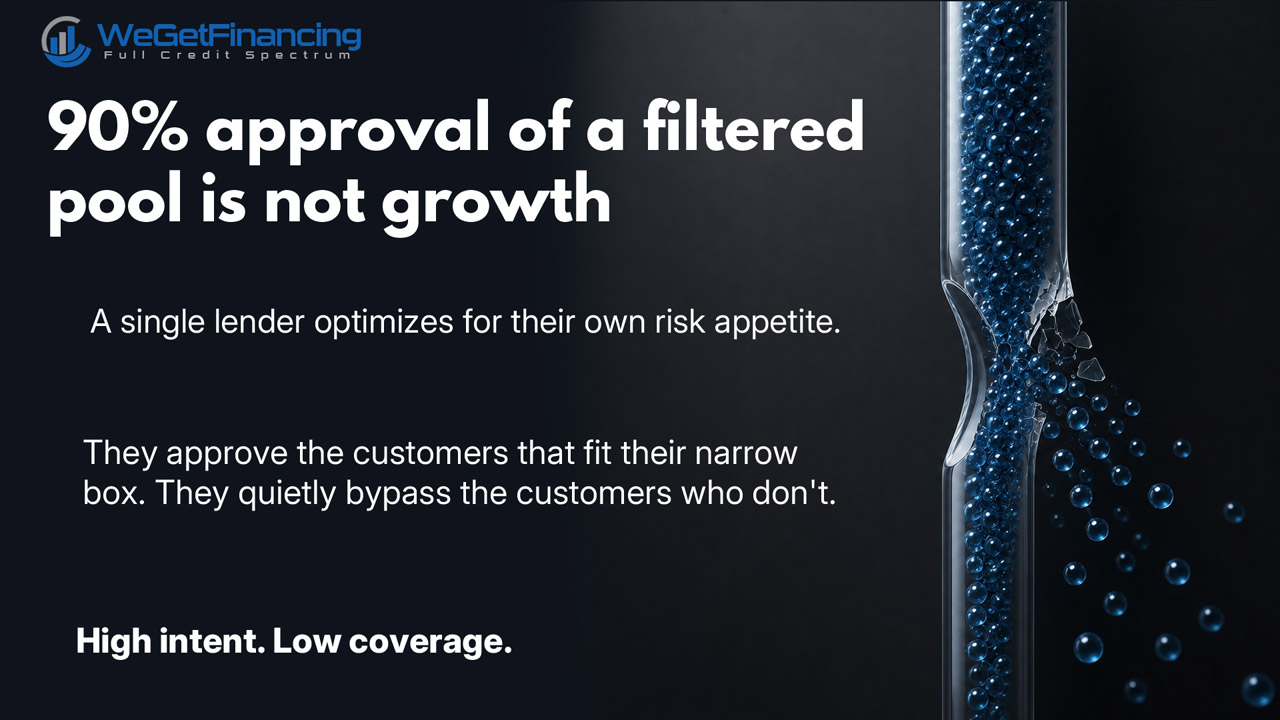
This is the Denominator Problem. Most single-lender providers calculate their success based only on the “survivors”, the narrow segment of customers who make it through their invisible pre-screening filters.
If a lender’s algorithm determines a customer is a risk, before they even finish typing their name, they are often quietly diverted or “pre-declined.” Because they never officially “applied,” they don’t count against the lender’s 90% success rate.
But they do count against your bottom line.
As a high-ticket merchant, you paid for 100% of your traffic. You paid the Customer Acquisition Cost (CAC) for every visitor. When a single-lender system silently bypasses 30% of those visitors to protect its own internal metrics, that 90% approval rate becomes a meaningless vanity metric.
It isn’t a measure of your store’s potential; it’s a measure of the lender’s comfort zone. And in a high-ticket environment, the gap between their “comfort zone” and your “total market” is where your revenue is leaking.
The Anatomy of an “Invisible Rejection”

In high-ticket e-commerce, a “Decline” is rarely a simple matter of a customer having no money. It is more often a failure of alignment. When you rely on a single-lender BNPL setup, you are essentially forcing your entire diverse customer base through a single, rigid risk-filter.
If the customer doesn’t fit that lender’s specific “box” at that exact moment, the sale dies. Here are the three most common structural failures that create the “Invisible Rejection”:
1. The Exposure Limit (Concentration Risk)
One of the most frequent causes of rejection for high-credit-score buyers is internal exposure. If a customer has an existing balance with a lender (e.g., they recently financed a laptop or a mattress with that same provider), the lender may hit a “concentration cap.”
Even with a 750 FICO score, the lender may decline a new $1,500 or $2,000 transaction simply to manage their own balance sheet risk. To the merchant, this looks like a customer credit failure. In reality, it is a service bottleneck.
2. Macro-Economic “Box” Tightening
Credit boxes are not static, they breathe with the economy.
In a hardening economic climate, lenders tend to quietly adjust their algorithms. A “Prime” borrower with a 700 score who would have been an easy “Yes” six months ago might now fall into a “Review” or “Decline” category due to shifting macro-risk.
When you use a single lender, you are tethered to their specific appetite. If they decide to get conservative, your conversion rate drops instantly, often without any notification to your sales team.
3. The Demographic Blindspot
This is another common source of silent approval leakage. Single lenders often optimize for a specific “ideal” borrower profile, usually younger, tech-savvy “thin-file” users or very specific “Super-Prime” tiers.
This creates a massive blindspot for:
- GenX & Boomer Buyers: High-net-worth individuals who may not use traditional BNPL apps frequently.
- First-Time Buyers: Customers with strong purchasing intent but no established history with that specific fintech provider.
Because a single lender lacks a diverse pool of capital, they cannot “pivot” to a different risk model. They simply bypass the customer, leaving you to pay the acquisition cost for a lead that was never truly “screened” for their actual potential.
Why “Button Stacking” isn’t a Strategy
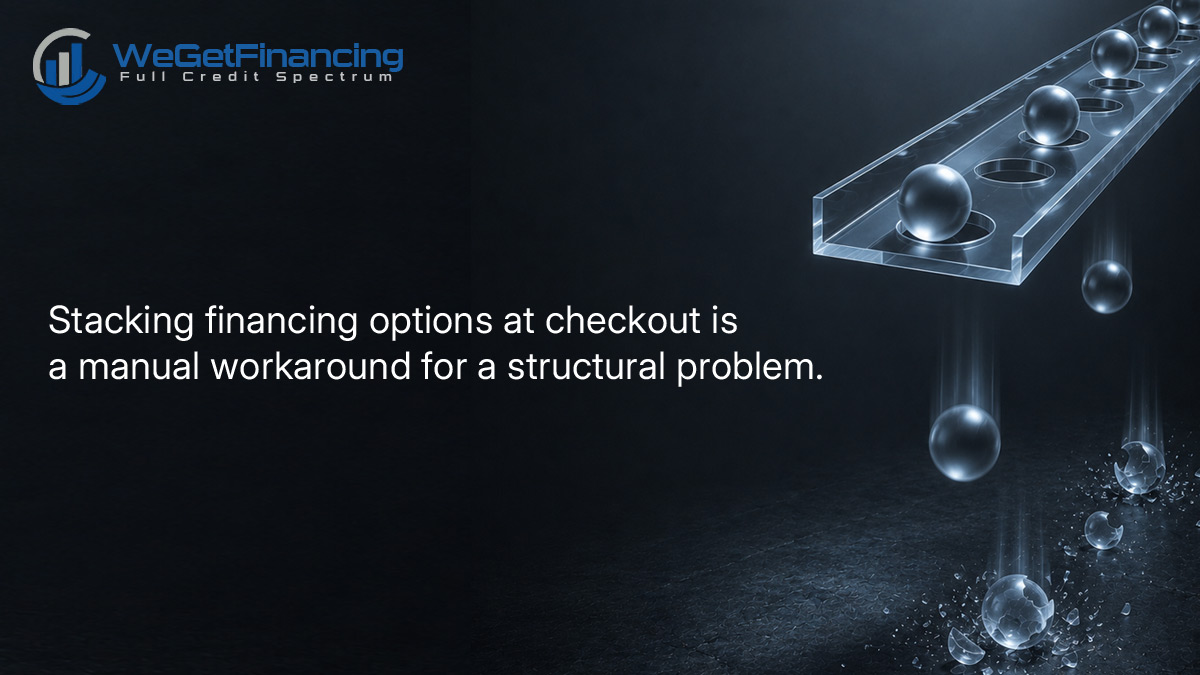
Here is another important point to address. Many merchants try to fix the “Denominator Problem” by manually stacking BNPL buttons at checkout (e.g., Affirm + PayPal + Klarna).
In practice, this often turns checkout into a maze for customers. Decision fatigue and friction quickly become part of the experience. While a balance must be found between offering only one or two payment alternatives at checkout, overwhelming customers with too many options is not the solution either.
But the problem goes deeper than simple checkout clutter. One specificity of the consumer financing field remains largely invisible to customers: they may recognize lender brands, but they have no way of knowing which provider is actually likely to approve them. Brand familiarity does not mean approval predictability.
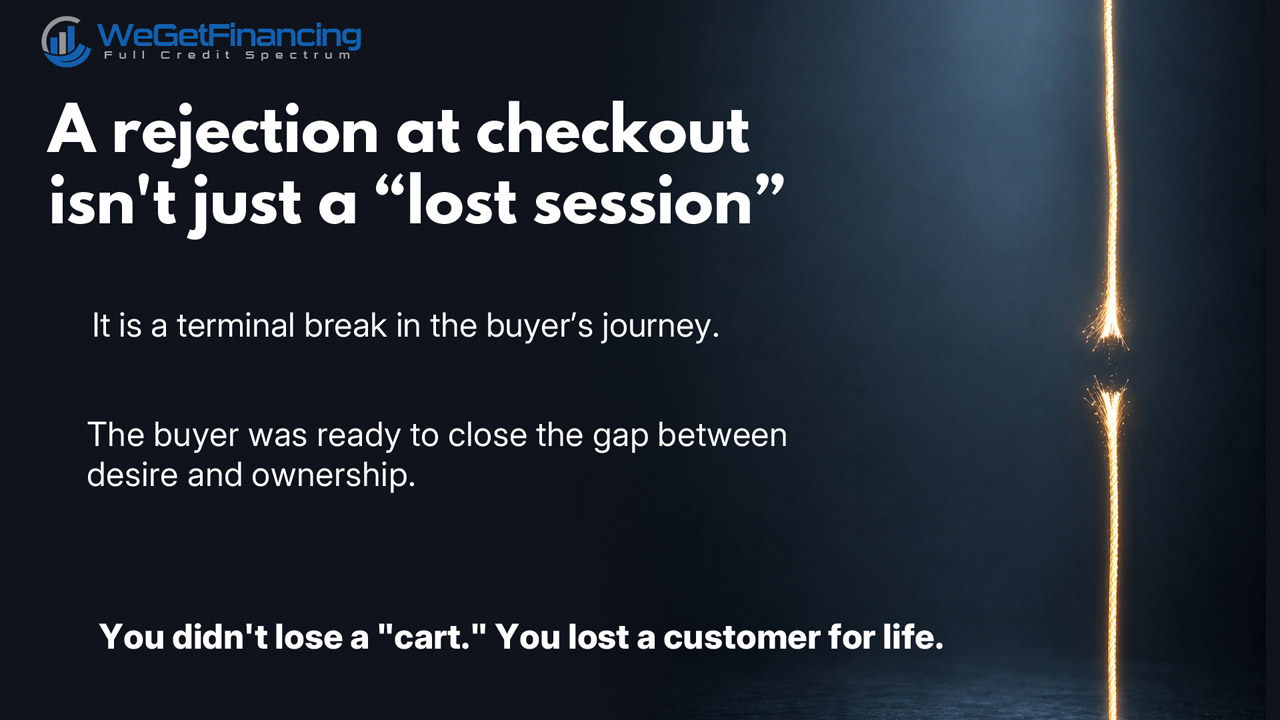
In most cases, what actually happens is simple: If a customer is rejected by the first button (and this will happen quite a lot), their confidence is shattered. Forcing them to try a second or third button feels like “begging” for credit, and most high-ticket customers will simply abandon the cart to protect their dignity.
Stacking buttons is a manual workaround for a structural problem.
What about in-store though?
In many cases, it’s a bit of the same. Special Credit Card from the shop or from single lenders (Synchrony, …) are there, often resulting in long in-store application processes with no guarantee of approval.
The same issue can also appear with stacked digital payment options and e-wallets at checkout. In some cases, the experience may feel even worse for the customer. They stand at the cashier after spending time filling their shopping cart, while still depending entirely on the willingness of a single lender to approve the transaction.
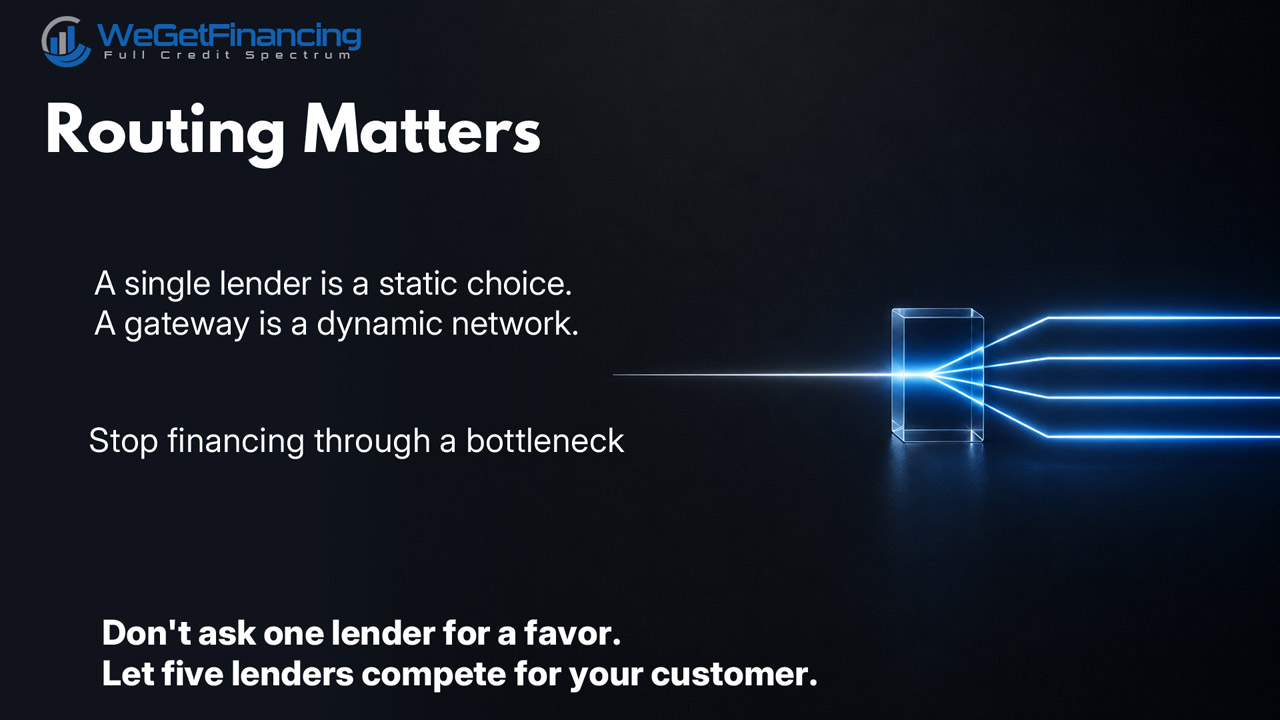
Again, routing matters. One funnel, a complete network of lenders able to offer tailored financing options in real time will always be more efficient than an ocean of complicated options.
The Multi-Lender Prism : Routing vs. Waterfalls
So if manual waterfall logic (aka, stacking single lenders at checkout) is not working, what about the Waterfalls strategy ?
This type of BNPL technology cascades the application from one lender to another until one accepts the financing request. In most cases, the waterfall starts with prime lenders targeting higher-credit borrowers and goes then to another lender in case of rejection, until eventually one accepts.
With this model, the lenders get to choose the customer. In other words, the financing options are bound to the lender that eventually accepts the request. The order of the lender in the cascade can be determined by acceptance criteria (prime to high prime), by commercial conditions, etc… The order of the waterfall is being defined by the platform.
In this type of process, customers with lower credit scores or specific profiles (Gen Z, first-time buyers, etc.) are often served last, if they ever reach a lender willing to approve them at all. For a deeper breakdown of waterfall lending, stacked lenders, and multi-lender gateways, you can also read our previous article on BNPL financing technologies and routing models.
A Simultaneous Marketplace
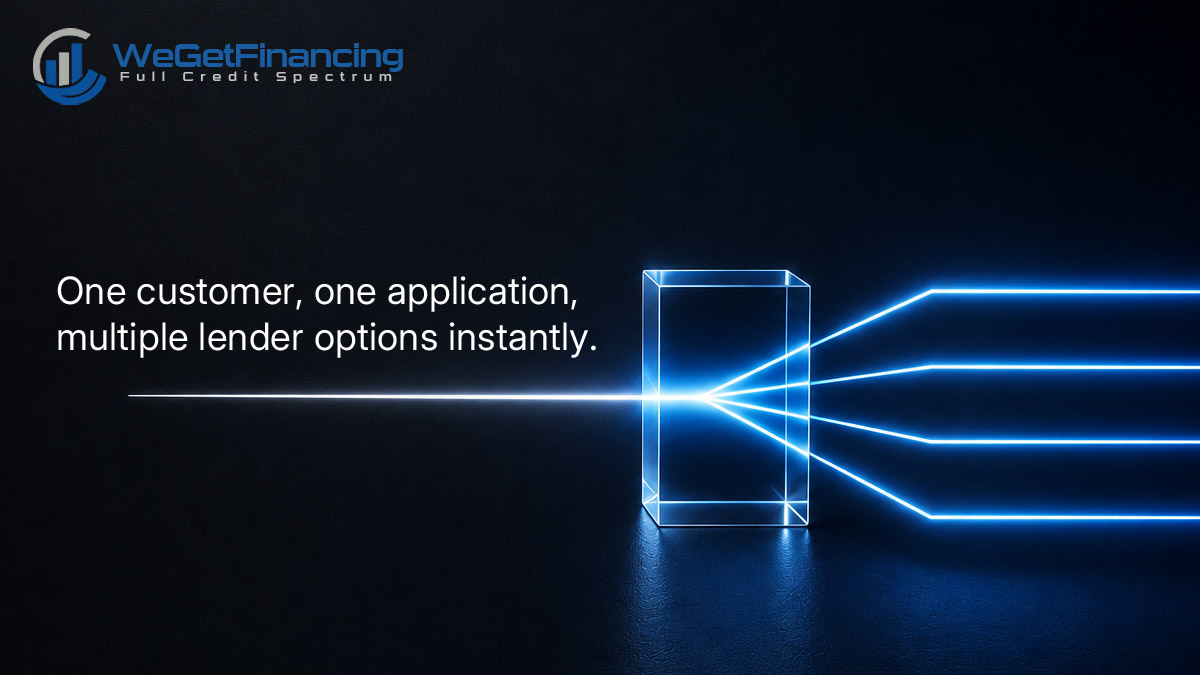
As opposite to the waterfall concept, a gateway acts as a Simultaneous Marketplace.
In such case, the customer applies once. Behind the scenes, the “Prism” routes that single application to lenders most likely to say “Yes” based on that specific buyer’s profile.
Once the application is submitted, lenders across the network can compete and propose a financing offer. This results in a list of pre-approved options that the customer can choose from.
In other words, a multi-lender gateway such as the WeGetFinancing one isn’t just giving customers more options; it’s giving them the right option instantly. Moreover, from a philosophical standpoint, it puts the customer at the very center of the financing choice.
The BNPL Leak Benchmarks
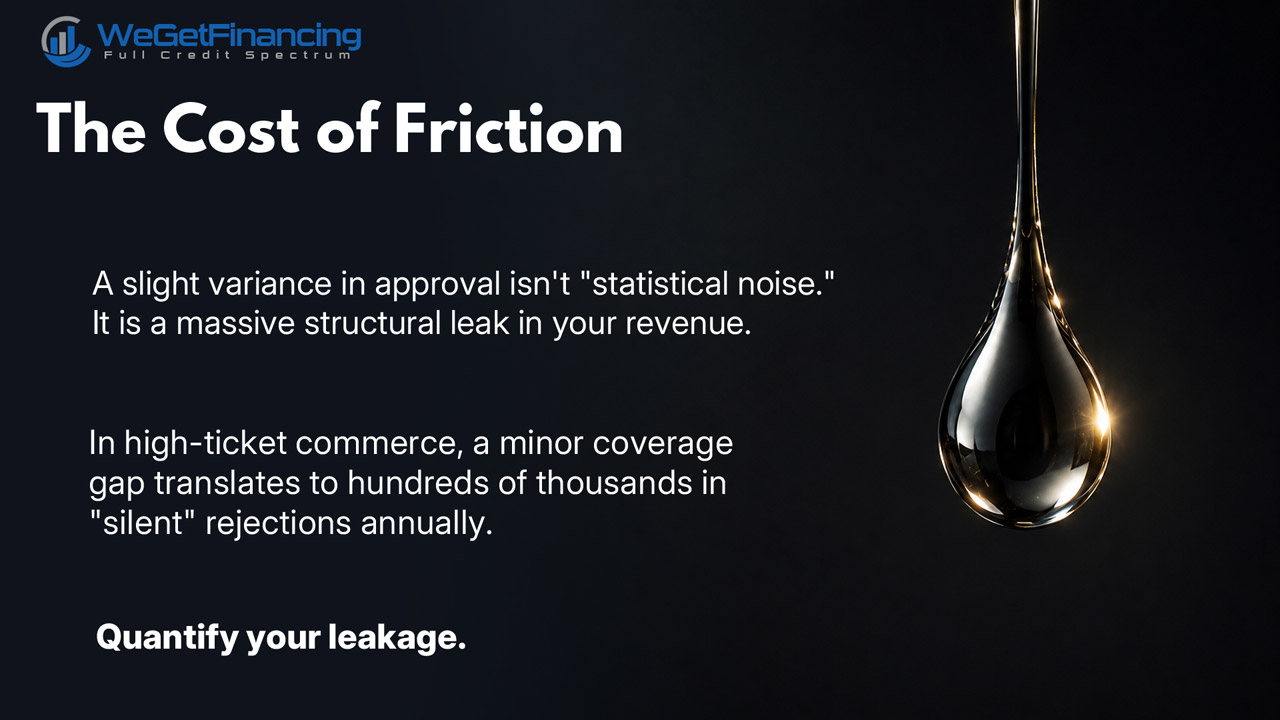
Quantifying financing leakage is essential, not only for current performance but also for future growth. The estimates below illustrate the potential scale of silent rejection in a single-lender environment:
| Variable | The “Single Lender” Friction | The Revenue Leak (Est.) |
|---|---|---|
| Exposure Limit | Customer has an existing balance with the lender. | 8% – 12% |
| Credit Tightening | “Good” scores (680-720) rejected due to macro-economic risk. | 10% – 15% |
| Demographic Bias | First-time buyers or customers with limited history with that lender. | 5% – 9% |
| Ticket Size Mismatch | The lender’s average loan size does not match your product price point. | Variable |
We are talking about a minimum coverage gap often sitting between 23% and 36%, and that is a conservative estimate. On high-ticket sales, the revenue currently being left on the table can be massive.
Another underestimated consequence hides behind these numbers. A rejection is not just a lost sale or wasted acquisition cost. It can also damage future customer trust, retention, and lifetime value — as explored in our article about the hidden cost of rejected BNPL customers.
Audit Your Approval Coverage
In business, principles matter, but numbers do too. The first step to fixing a leak is measuring it.
Our BNPL Revenue Calculator allows you to run your own numbers based on these industry benchmarks. No email required. If the results surprise you, it may be time to audit your approval coverage.
Prefer a direct conversation instead? Our financing specialists can help you identify where silent rejection may be impacting your conversions.
The WeGetFinancing Editorial Team
Expert insights on BNPL, consumer financing, and retention strategies.